The Shot: What Basketball Taught My Son That I Never Could.
Practice doesn’t make perfect; it makes confidence.
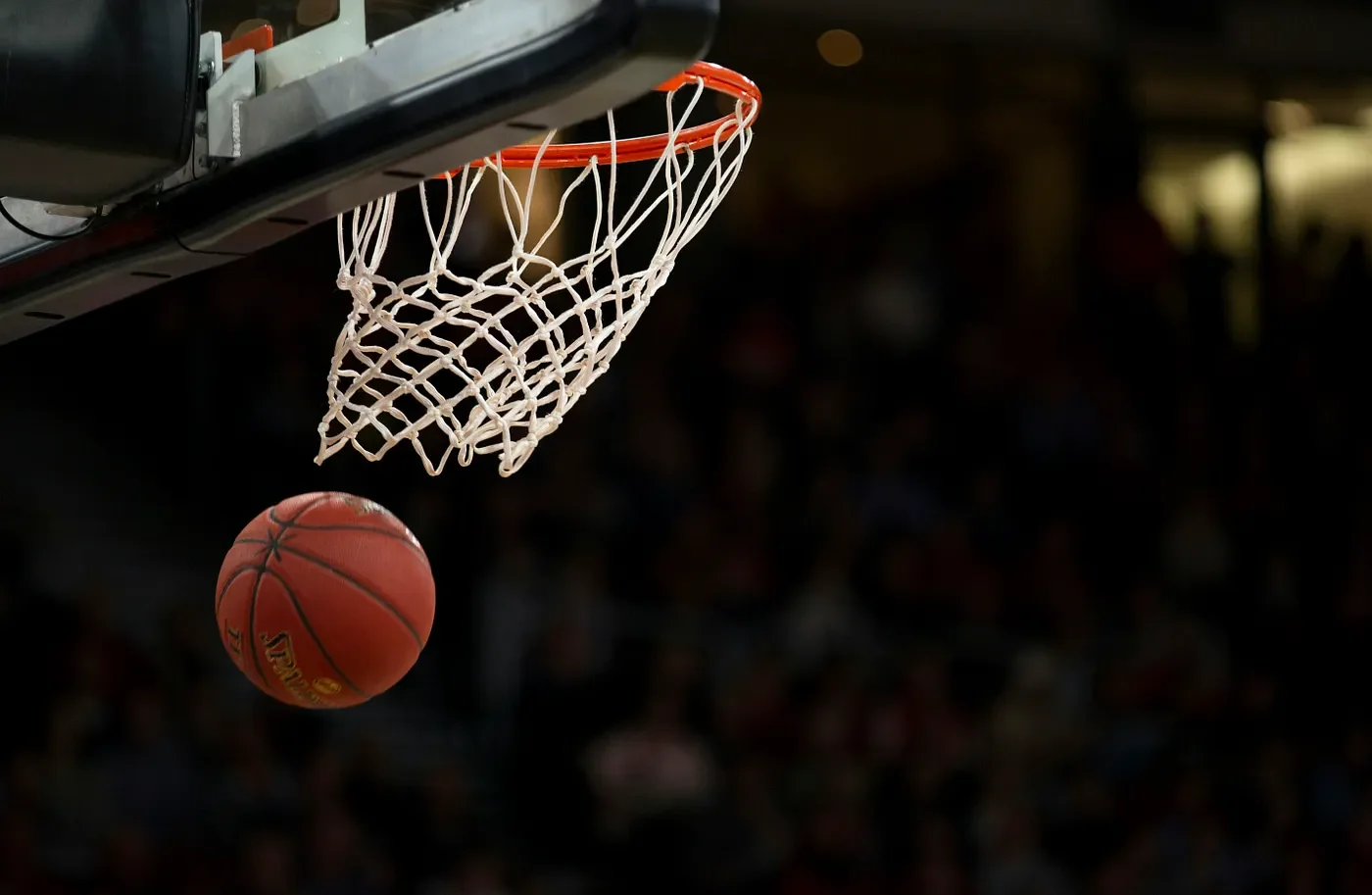
Photo by Markus Spiske on Unsplash
Perched on our driveway is an old, worn out adjustable basketball hoop. The kind you pull a pin in the back to adjust the height to seven feet to practice windmill dunks.
In the spring, a bird comes by and pecks off a piece of the brittle net and uses it to build a nest in our backyard. The cracked plastic base houses crickets and spiders and tiny lizards that scurry out whenever I move it. Two five-pound bags of sand resting on the base make sure it doesn’t fall over when there’s a slight breeze.
The hoop is a piece of shit.
It’s also a hoop that is the stuff of every kid’s and every dad’s dreams. A magical totem that turns everyone who touches a basketball in its presence into Michael Jordan or Kobe Bryant or LeBron James. (Insert your basketball icon HERE.)
You can talk smack to the hoop and vent about your frustrations from work and life. It’ll never talk smack back because it knows you’re just trying to get better at handling the rock. It’s when you step away from the hoop that the lessons it’s taught you come to light.
A hoop of one’s own.
After work my son and I would shoot a few baskets. A time to bond. And a time to feel like a teenager again. I wanted to show my son that his old man still knows a thing or two about basketball. I still have a cross-over (but it’s nowhere near killer). And I still have a jump shot (even though I can’t jump). It’s twenty minutes of reliving that time I made the go-ahead game winner in eighth grade.
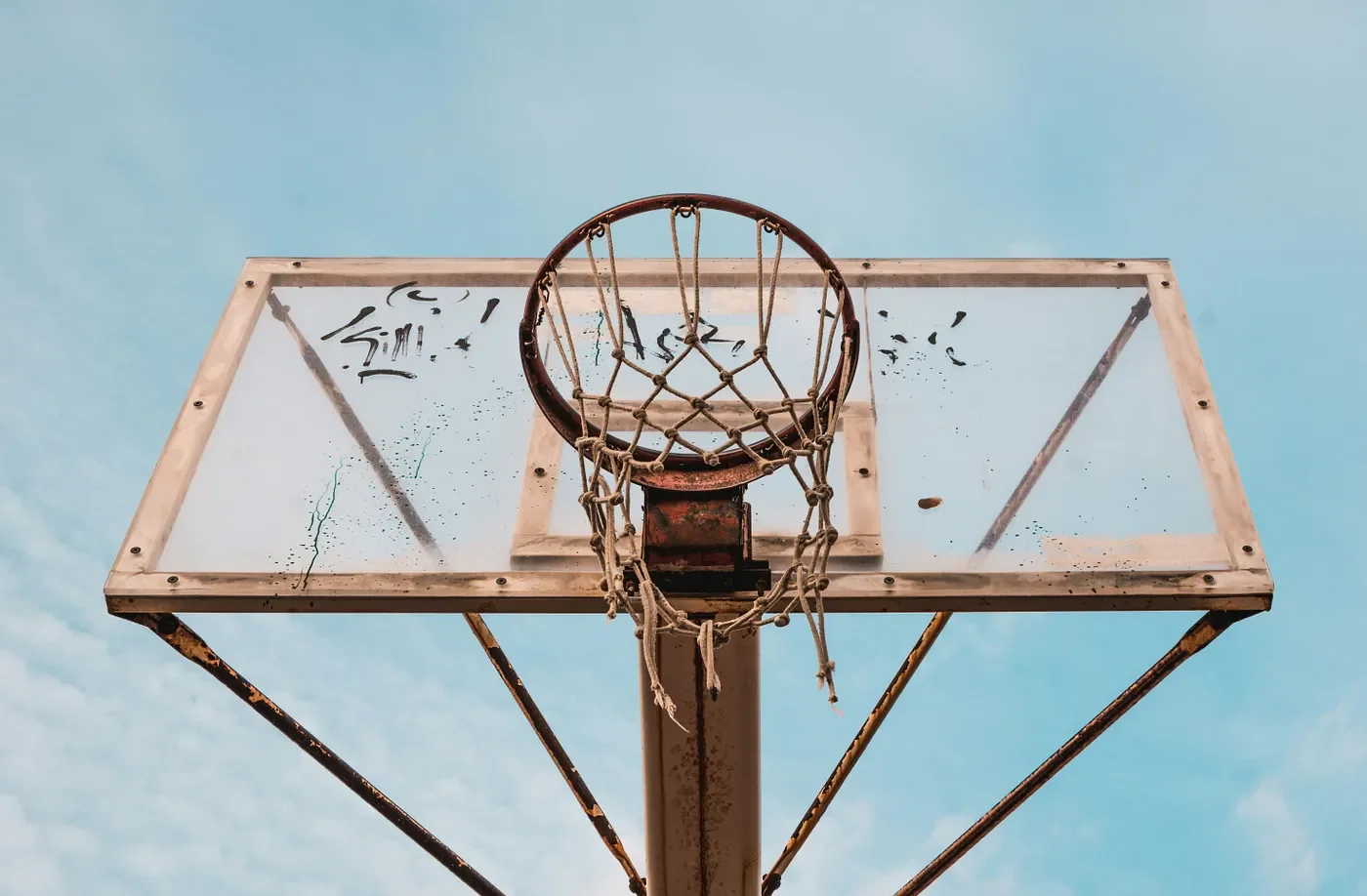
Photo by Jim Kalligas on Unsplash
My oldest son’s eyes lit up like fireworks the day a friend of ours dropped the old hoop off at our place before they moved to Texas. He is just started the fourth grade and anytime he gets a new piece of sports equipment he freaks out.
The hoop was already in bad shape from our friend and his son playing countless games of PIG and KNOCK-OUT. But it served its purpose. It helped a father and son bond. My friend wanted to throw it in the garbage. I told them I would take it.
We got someone else’s memories and were ready to create our own.
“Grab the basketball,” I told my son.
He dashed inside and came back with a soccer ball.
“Not that. A basketball is brown.”
His enthusiasm to play with me overshadowed any sense of embarrassment he may have felt from not knowing which ball he should’ve grabbed.
That first day with the hoop was unforgettable. Being a well-intentioned dad, I decided I’d start teaching my son how to play. I started with the most fundamental skill I could think of: how to dribble a basketball while keeping your head up. He’s never played a day in his life, so I thought this would be a good place to start.
“If you keep looking down when you dribble you’ll never see the opportunity for the perfect pass or the perfect shot right in front of you,” I told my son.
My son gave me a nod like he knew what I was telling him. But in reality, he had no idea. (I still struggle to keep my head up when I dribble, literally and figuratively.)
To get him going I challenged him with a simple exercise that my basketball coach had me practice when I started playing ball in eighth grade.
“Walk up and down the sidewalk dribbling the ball. First start dribbling only with your right hand. Walk down the street. Then switch to your left and dribble only with that when you come back. And always keep your head up,” I said.
“You mean like this,” my son said.
He took off running down the sidewalk. Not one time did I tell him to run, but the excitement got the best of him. Between his arms flailing, his legs running, and his eyes trying to look up, he looked like a puppet with twisted strings. He accidentally kicked the ball and it rolled down the street until it bounced into a neighbor’s brand new Tesla.
“Not quite right,” I said, “but keep practicing and you’ll get it.” I gave my son a high-five and hugged him for his effort. It’s part of the process of learning a new skill, I told myself.
To my son’s credit, he took my advice and practiced every day. He practiced for days. Then weeks. Then a few months. Up and down the sidewalk. Left hand. Right hand. Left hand. Right hand. Then lay-ups. Then free throws.
When I’d come from work, he’d be in the driveway chucking up shots from the sidewalk. He’d wave me off to park on the street. Before I could turn off my car, I’d hear, “Dad, guard me. One v one.”
We’d play every day, including weekends, for weeks. We’d shoot hoops until I couldn’t see the ball bouncing off the rim.
“It’s time for bed,” my wife would tell us as the street lights flickered on. “And your son didn’t even have his dinner.”
“That’s okay,” my son would respond. “I’m not hungry anyways.”
I’d give my wife a shrug, sweat dripping off my forehead. As if there was anything I could do to stop my son from playing.
Every day my son improved. He got better at shooting. He got better at dribbling. He got better at whining and throwing a tantrum every time he lost.
It might sound unfair, but I can’t let him win every game, right? What would I be teaching him if he always won against his dad? How do I teach him that losing is just part of sports?
It’s a big part of life, too.
Photo by Lesli Whitecotton on Unsplash
We signed up my son for recreation basketball. After we told him he slept with a basketball couched between his arms for a week. He loved playing basketball with me in the driveway. And I played recreation basketball when I was a little older than him.
It was one of those moments of connection between father and son. It felt like the passing of a torch. I still have memories of when I played. And when I watch my son, it’s like watching my memories come to life. It’s a moment when I can tell him, “when I played basketball at your age, this is what I did.”
Recreation basketball is a big deal in Los Angeles. Registration is in the summer for a league that plays in the winter. It’s a miracle just to be able to get on a team. Every season there are at least four hundred kids on the waitlist.
During practice and scrimmages I could see some of his talents on the court. He could dribble (without kicking the ball) and he knew how to make crisp, strong passes. He held his own defensively, despite often being one of the shortest kids on the court every game.
But I could tell he was holding back. He wasn’t letting loose on the court as he would with me in the driveway. It’s hard to explain because it’s more of a feeling. I could feel a reserved energy about his game. Not nearly as confident and assured as he was when he played with me.
Sure, there are more kids on the court than just playing against his dad. But everyone he played against were his friends from school, and everyone was close to his age. There were a few kids who could routinely dribble behind their back. But most kids were the same talent-wise. None of them could make a free throw.
The psychological safety net of playing at home was gone.
What scared me the most is the timidness I could sense in my son is the same timidness trait I have, and it usually comes out when I’m not confident in my skills. It comes out when I’m comparing myself to others. It’s a trait that I remember my mom having.
Maybe it’s hereditary? Maybe it’s learned?
“Hey son, don’t overthink the game when you’re on the court,” I said to him one time during a water break. “Pretend it’s just you and me. Play the game like you’re used to playing at home.”
“I’ll try, dad,” my son said and guzzled from his Bulls water bottle and hustled onto the court.
“That’s all I can ask of you,” I said, “is to just try your best.”
And that’s what he did. He tried. Every practice, every scrimmage, and every game he’d stop thinking and just reacted to the moment. His confidence grew. He was driving to the lane. Throwing up mid-range shots, a few three’s.
He became comfortable with a crazy shot that looked like a cross between a skyhook and a lay-up. He’d drive to the right and throw up the ball with a rainbow arc. I’d say he’d hit at least 50% of those shots every time he’d take it.
As his confidence grew and the timidness wore off, his skills improved fast. His team also started to win games.
At the end of the season his team was placed in the loser’s bracket championship. The run of losses to start the season put them in a hole they couldn’t dig out of.
The loser’s bracket playoffs and championship game took place over three weekends. Three games. Win and you’re in. Sudden death.
Every game during the playoff my son got better. He’d take more shots. Dribbled on both sides of the court. He’d still get stuck when the other team would trap him when he crossed the center court.
“They’re doing that because they don’t want you to beat them off the dribble,” I told him.
“What does ‘off the dribble’ mean?” my son asked.
“It means they know what you can do with the ball in your hands,” I explained. “They want you to pass it right away or possibly steal it.”
“That must mean I’m pretty good then,” he said. “That’s cool.”
There’s only so many times I could tell my son that I thought he was good. He wouldn’t believe me. He had to tell himself that he was good, and then he’d believe it.
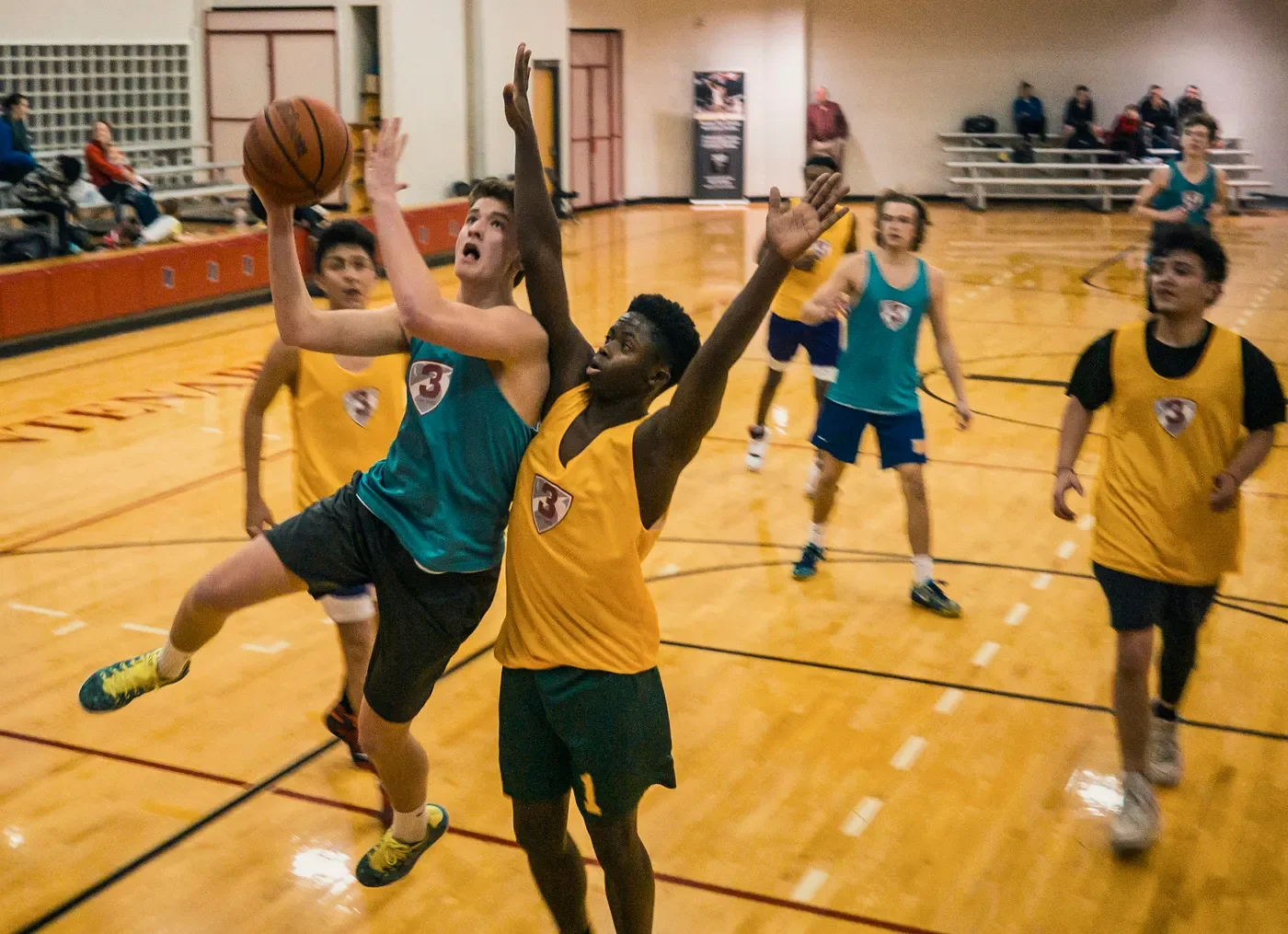
Photo by Nik Shuliahin 💛💙 on Unsplash
Championship game.
My son’s team handled the other teams in the playoffs fairly well. Most games were blowouts. Everyone on my son’s team was playing well.
It was on to the championship game and a rematch of a team that blew them out the first regular game of the season.
And…my son’s team was down their best player.
On the drive to the court, I told my son, “With your best player out, you’ve got to step up and play more and play better,” I told him.
Calmly and confidently he responded, “okay.”
The game was a nail biter since the jump ball. It was back and forth the entire time. No team had an advantage. They matched up well. A lucky shot here. A unlucky bouce there.
With a minute left in the game. My son’s team was down seven points. A few quick baskets and they were right within striking distance.
Down 2 points with less than :20 seconds left.
My son dribbles the ball down the court. No trap. The other team figures time will expire.
My son drives to the left and stops about 30 feet from the basket and throws up a beautiful shot.
SWISH! Up by 1 point.
The crowd is cheering. Even the other team’s parents were celebrating — how could you not?
Everyone is celebrating. The team is jumping up and high fiving my son.
:07 seconds left on the game clock.
The other team inbounds the ball. They run as fast as they can across center court. And a player chucks the ball in the air like the basketball was a baseball.
Time is expiring. We’re going to win!
SWISH! Down 2 points…and my son’s team lost.
The thing about sports is that no matter how good of a coach a parent is or how much they tell their kid they’re the greatest or how much they spend on private lessons and equipment…none of it can replace the learning and growth that comes from playing the game.
I tell this story because my son learned a lesson that day and that basketball season that I could never in all my dadly infinite wisdom teach him:
Sports are about challenging yourself to get better. The only game that matters is the game that’s being played between your ears.
Sure, it sucks to lose. And it hurts to lose when a kid has put in the time and effort and the team has grown together and bonded.
I reminded my son that he made that shot at the end of the game because he put in the time during the season and before the season to get better and build his confidence.
All I can do is give him the space and encouragement to learn, experiment, and practice.
All I can do is show him how to build confidence by taking as many shots as he can.
He’ll miss a bunch of shots in life. But it’s the ones he makes, after hours of practice, that count the most.
“I can’t wait til next season, dad,” my son said. “I think we’ll win it all.”