Love in the Time of Syntax: Model Sentences from Gabriel Garcia Marquez
Three sentences to study by the author of One Hundred Years of Solitude, Love in the Time of Cholera, and The General in His Labyrinth. Plus, quotes about Faulkner, Hemingway, and being human.
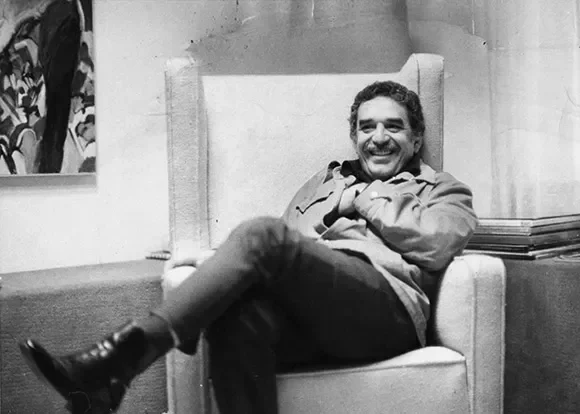
Photograph by Alan Riding
Gabriel García Márquez, the Colombian novelist, journalist, and Nobel Laureate, is one of the most influential literary voices of the 20th century. Best known for One Hundred Years of Solitude and Love in the Time of Cholera, his work blends the everyday with the extraordinary and by doing so pioneered the genre of magical realism. Through lyrical prose, intricate storytelling, and a deep exploration of history, politics, and human emotion, García Márquez crafted narratives that feel both intimate and mythic.
Let’s explore his writing style and his thoughts on Faulkner, Hemingway, and the human experience.
Three Questions to Ask When Studying Sentences
Use these three guiding questions to help you study the model sentences below and to write your own:
How is the sentence structured, and why does that structure work?
What literary or rhetorical devices are being used, and how do they enhance the sentence?
How does the sentence create emotion, and what techniques contribute to that effect?
Three Sentences by Gabriel Garcia Marquez to Study and Imitate
Sentence #1
“He is ugly and sad... but he is all love.”
Practice: Try this sentence frame using a topic from your writing.
[Pronoun] is _____ and _____ … but [Pronoun] is all _____.
Here’s an example I came up with.
He is downtrodden and heartbroken … but he is all the father I ever had.
Sentence #2
“Freedom is often the first casualty of war.”
Practice: Try this sentence frame using a topic from your writing.
_____ is often the first _____ of _____.
Here’s an example I came up with.
Regret is often the first emotion of the wicked.
Sentence #3
“The world was reduced to the surface of her skin and her inner self was safe from all bitterness.”
Practice: Try this sentence frame using a topic from your writing.
The world is/was _____ to the _____ of [Pronoun] _____ and [Pronoun] _____ is/was _____ from _____.
Here’s an example I came up with.
The world was expanded to the limits of his imagination and his art was a gift from his aspirations.
Your Turn: Use the model sentences and frames to craft your own sentences and post them in the comment section below.
Two Quotes by Gabriel Garcia Marquez on Faulkner, Hemingway, and Being Human
Quote #1
“Faulkner is a writer who has had much to do with my soul, but Hemingway is the one who had the most to do with my craft - not simply for his books, but for his astounding knowledge of the aspect of craftsmanship in the science of writing.”
Journal Prompt: Who are five writers who have influenced your storytelling and writing? In what ways has each writer made an impact on you as a storyteller and writer?
Quote #2
“Human beings are not born once and for all on the day their mothers give birth to them, but ... life obliges them over and over again to give birth to themselves.”
Journal Prompt: In what ways do you feel like you’ve been born again and again and again? How have you changed throughout your life? Are those planned or are they a reaction to events that you experienced or something else?
One Cool Thing - How to read One Hundred Years of Solitude
Benjamin McEvoy hosts a wonderful podcast and YouTube channel called Hardcore Literature in which Benjamin has an open and honest discussion about specific works and authors of world literature.
This video is over 80 minutes long! And it introduces readers to Gabriel Garcia Marquez and his world and his writings. It’s an amazing presentation that is perfect for the literary-minded person.
Help Spread the Word
If you found this writing lesson helpful, here are three ways you can help:
Leave a comment below about what you like and any tips for making it more helpful.
Share this writing lesson with a friend who wants to improve their writing.
Click on the Subscribe button.