The Treasure is a Heartbeat: What Makes “A Haunted House” by Virginia Woolf Great?
Woolf's quiet and ethereal tale that perfectly blends symbolism, repetition and rhythm, and stream of consciousness to explore the relationship between love, time, and memory.
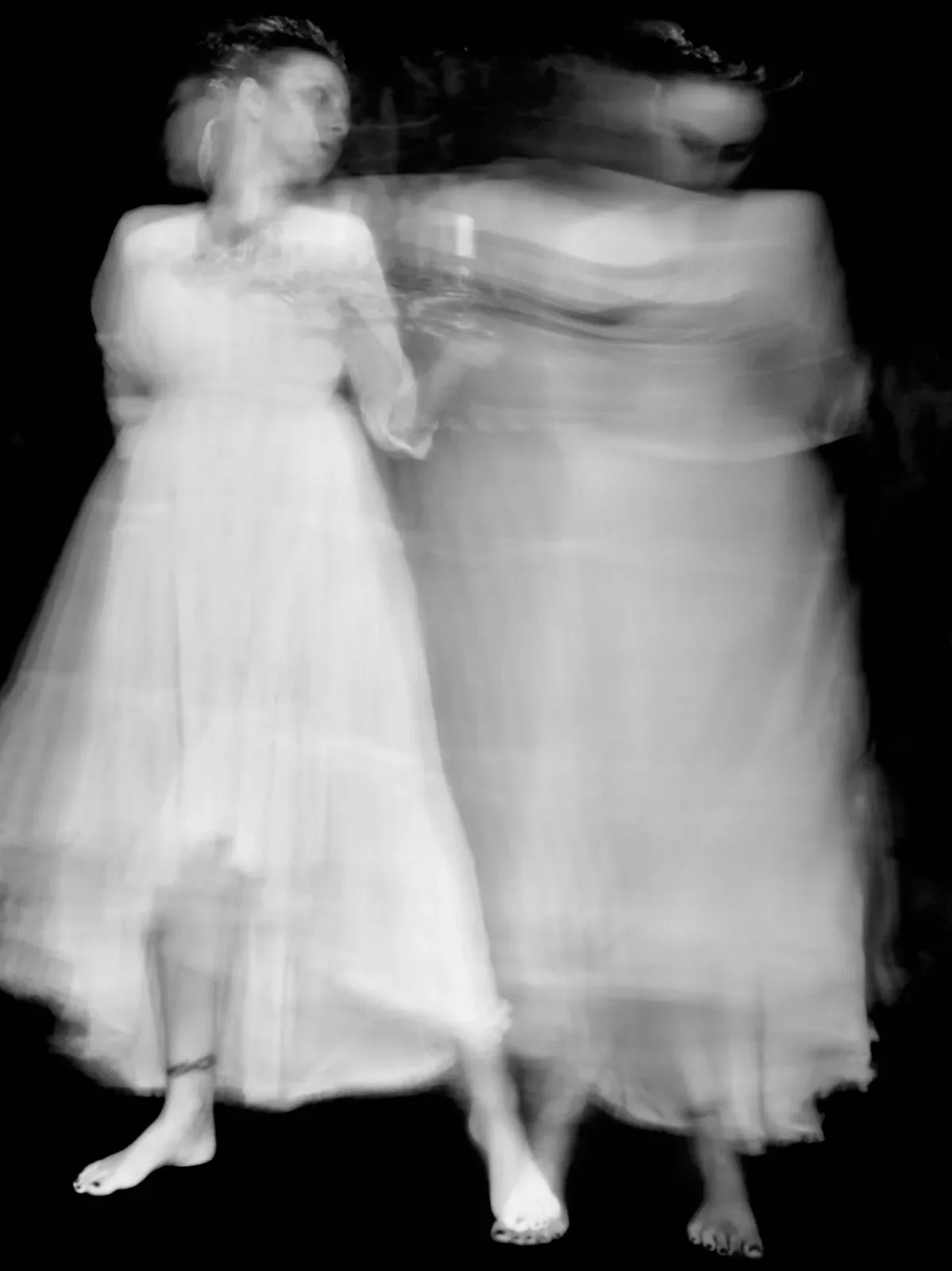
Photo by Photos_frompasttofuture on Unsplash
Virginia Woolf sits on the board of my creative directors of inspiration. Her style, her approach to storytelling, and her belief in the otherworldly power of art to transform human perception continues to drive my own creative pursuits.
I first encountered Woolf’s writings in graduate school where I had to fill a few credits for my masters and decided to enroll in a seminar focused only on Virginia Woolf.
We had to read EVERYTHING by Woolf. Novels. Short stories. Essays. And, yes, her entire oeuvre of journals. The latter being the focus of an essay I wrote tracing the creative journey of To The Lighthouse, one of my favorite novels.
(It was also the essay in which the feedback I received from my professor was longer and better written than the paper I submitted. Grad school, if you know what I mean.)
I’m excited to share this little yet powerful story of Woolf’s that I think is the perfect representation of all of her writings: poetic, haunting, intentional, layered, and, more importantly, human.
Woolf’s “A Haunted House,” is a story that unfolds in quiet glimmers of meaning and gently asks the reader to listen closely for what’s just beneath the surface.
Before reading on, you MUST stop and read Woolf’s beautifully haunting story. You can access it HERE.
Summary
In “A Haunted House,” Woolf reimagines a ghost story, not as a tale of terror but as an exploration of the relationship between love, memory, and the passage of time. A living couple shares their home with the spirits of a long-deceased couple who search for something precious—not gold, not possessions, but a feeling, a moment, a truth. The story suggests that what haunts us most isn’t fear but the echoes of love that live on beyond death.
With her characteristic ethereal, poetic language, Woolf crafts an atmosphere where reality and memory blur.
Let’s explore three techniques that make Woolf’s story so compelling:
How does Woolf use symbolism to deepen the story’s meaning?
How does Woolf use repetition and rhythm to create a hypnotic effect for the reader?
How does Woolf’s use of stream-of-consciousness engage the reader?
How does Woolf use symbolism to deepen the story’s meaning?
In Woolf’s story, common objects become infused with emotion and history. Innocuous items transform the house into something more than just a setting—it becomes a vessel for love, memory, and time.
The House
“Whatever hour you woke, there was a door shutting.”
The house is more than just a setting—it represents continuity, memory, and love. It holds both the living and the dead, blurring the boundaries between past and present. The idea that doors are always opening and shutting suggests the movement of time and the constant presence of those who once lived there.
Light and a Heartbeat
“The pulse of the house beat softly.”
The house is described as if it’s alive. A being with a heartbeat. This symbolizes warmth, intimacy, and love as something enduring and organic.
Light, which flickers and moves throughout the story, represents the intangible presence of the ghosts—not frightening but comforting, like a lingering memory that flickers on and off in our minds.
Treasure
“The treasure buried; the room…”
The ghosts are searching for a “treasure,” but it’s not material wealth. The treasure is love or happiness or a shared moment of connection. The search for this treasure reflects how people, both alive and dead, search for meaning and fulfillment beyond the physical world.
Doors Opening and Closing
“From room to room they went, hand in hand, lifting here, opening there, making sure—a ghostly couple.”
The repeated image of doors opening and closing symbolizes transition between life and death, past and present, presence and absence. It reinforces the idea that memories and love do not vanish but instead move through time like a flickering light.
Windows and the Outdoors
“Looking out into the garden, the trees tossing their boughs.”
The outdoors represents freedom, movement, and life. The window serves as a threshold, a passageway, between the interior (memory, reflection, love preserved in the house) and the exterior (the ongoing world, change, and life beyond the past). The movement of the trees contrast with the stillness of memory inside the house.
Death as Glass
“Death was the glass; death was between us.”
Death is a barrier—like glass, it separates but does not erase. The living and the dead are divided, yet they can still see each other. They can still feel the presence of love across time.
Each of these symbols works together to reinforce Woolf’s central theme: love and memory exists beyond death. The ghosts are not lost souls seeking revenge or resolution. They are lovers retracing their happiness and prove that emotions and connections extend beyond time.
A few ideas to consider when using symbolism.
Symbolism should deepen meaning, not just decorate
Woolf’s symbols—light, doors, the house, and the treasure—aren’t decorations for the setting. Each supports the story’s theme of love transcending time.
Takeaway: Writers should make sure the symbols they use in their story serve a deeper purpose that deepens the emotional and thematic essence of the story.
Use subtle symbolism to create layers of meaning
Woolf doesn’t explicitly state that the treasure is love or that doors represent transitions. Instead, she allows the reader to interpret these elements naturally.
Takeaway: Writers can use symbolism to create a more immersive and thought-provoking reading experience.
Let symbolism work with other literary devices and techniques
Woolf pairs symbolism with personification (e.g., “the pulse of the house”) and metaphor (e.g., “Death was the glass”) to make abstract concepts tangible. And relatable!
Takeaway: Writers can combine symbolism with imagery, tone, or structure to enhance the story’s depth and richness.
Repetition reinforces symbolic meaning
The repeated image of doors opening and closing supports the idea of movement between past and present.
Takeaway: Writers can use recurring symbols throughout a story to create resonance and unity.
Symbolism can evoke emotion without direct explanation
Woolf’s symbols create a nostalgic, beautiful atmosphere without heavy exposition.
Takeaway: Writers should trust their readers to infer meaning rather than over-explaining the significance of a symbol. Readers know more than you think!
The mundane can be symbolic
Woolf transforms an ordinary house into a cradle of memory, love, and time.
Takeaway: Writers should consider how everyday objects (windows, doors, lights, etc.) can take on deeper meaning in their own stories.
How does Woolf use repetition and rhythm to create a hypnotic effect for the reader?
Repetition and rhythm shape the way a story is read and, more importantly, how the story is felt.
Woolf’s use of recurring phrases, sentences that echo each other, and a flowing, almost breathless rhythm envelopes the reader in the ethereal nature of time and memory.
The rhythm of the story mimics the drifting movements of the ghosts and the living couple. It also supports the idea that the past is never gone. The past echoes within our memories and within time.
By using repetition, Woolf captures the way emotions, especially love and loss, return to us in waves. This technique keeps the story from feeling like a linear narrative; instead, it feels like a pulse, a heartbeat, a series of recurring moments.
Here are seven sentences to review and study from “A Haunted House” that masterfully use repetition and rhythm.
Sentence #1
“‘Safe, safe, safe,’ the pulse of the house beat softly.”
The repetition of “safe” mimics a heartbeat. This creates the idea that the house is alive and pulses with memory and emotion. This rhythmic repetition lulls the reader into the story’s dreamlike atmosphere.
Sentence #2
“Death was the glass; death was between us; coming to the woman first, hundreds of years ago, leaving the house, sealing all the windows; the rooms were darkened.”
The repetition of “death” emphasizes its inevitability and its role as a boundary between the living and the dead. The rhythm of the sentence, with its cascading waterfall of clauses, mimics the movement of time and draws the reader deeper into the story’s poetic flow.
Sentence #3
“‘Here we left it,’ she said. And he added, ‘Oh, but here too!’ ‘It’s upstairs,’ she murmured. ‘And in the garden,’ he whispered.”
The back-and-forth rhythm of dialogue, combined with short, fragmented sentences, creates a call-and-response effect. The reader is drawn into the ghost couple’s intimate search as if overhearing an incantation or a song.
Sentence #4
“‘Open the door,’ he breathed, ‘we might find it here,’ he murmured.”
The repeated plea to “open the door” creates suspense and expectation. The soft, rhythmic phrasing (“he breathed,” “he murmured”) makes the moment feel ethereal. This blurs the boundary between past and present.
Sentence #5
“‘They’re looking for it; they’re drawing the curtain,’ one might say, and so read on a page or two.”
The repeated structure (“They’re looking for it; they’re drawing the curtain”) mirrors the movement of the ghosts themselves and adds a hypnotic quality that makes the reader feel like they, too, are moving through the house like ghosts.
Sentence #6
“‘But it wasn’t that you woke us. Oh, no. They’re looking for it; they’re drawing the curtain,’ one might say, and so read on a page or two. Now they found it. One would be certain, stopping the pencil on the margin.”
This passage repeats “they’re looking for it” and “one might say,” and supports the cyclical, elusive nature of the search. The rhythm slows down the reading pace and forces the reader to feel caught in the same timeless loop as the ghosts.
Sentence #7
“‘The treasure buried; the room… the heart of the house beats proudly.’”
The repetition of “the” before each noun slows down the sentence and makes it feel deliberate and ceremonial. The rhythmic phrasing makes the house feel alive and highlights the connection between the home, memory, and love.
A few ideas to consider when using repetition.
Repetition can create a hypnotic or dreamlike effect on the reader
Woolf’s repetition of words and phrases (“safe, safe, safe”; “they’re looking for it”) makes the story feel fluid and continuous as if the reader is moving through a dream.
Takeaway: Writers can use repetition to soften transitions, blur time, and create a sense of inevitability or mystery.
Rhythm can mirror the story’s emotional arc
Woolf’s repeated mention of a “pulse” or “beating” mimics a heartbeat and enhances the themes of life and love.
Takeaway: Writers should consider how the pacing of their sentences—through short bursts, long flowing lines, or rhythmic repetition—can reflect the emotions they want to evoke in readers.
Repeated phrases can emphasize theme and meaning
Woolf returns to certain phrases (“open the door,” “they’re looking for it”) to highlight the central ideas of searching, discovery, and remembrance.
Takeaway: Writers can use strategic repetition to highlight the most important themes in their story without stating them outright.
Language can mimic movement and sound
The ghost couple’s search is reflected in the way phrases are repeated in a back-and-forth rhythm as if their voices are echoing through the house.
Takeaway: Writers can use repetition and rhythm to make their prose feel musical and create a sensory experience that pulls the reader in.
Repetitive structures can blur time and reality
Woolf’s cyclical sentence patterns dissolve the boundaries between past and present, living and dead.
Takeaway: Writers can experiment with repeating structures to create a sense of timelessness as if past events are still alive within the present moment.
By studying Woolf’s use of repetition and rhythm, writers can see how language can shape and mold the atmosphere of a story, illuminate the themes and central ideas presented, and immerse readers in the world of a story.
How does Woolf’s use of stream-of-consciousness engage the reader?
Woolf’s “A Haunted House” uses stream of consciousness writing to engross the reader in the narrator’s mind and blend and mix external events with internal thoughts in a fluid, dreamlike manner.
Let’s take a look at some examples and explanations of how each use of stream of consciousness keeps the reader engaged:
Opening lines that blend the past and present
“Whatever hour you woke there was a door shutting.”
The sentence suggests an ongoing, timeless action, and immediately engages the reader in a fluid, shifting reality. The absence of a clear subject (“who shut the door?”) pulls the reader into a mystery, encouraging active participation in piecing together the scene.
Fluid shifts between perception and thought
“From room to room they went, hand in hand, lifting here, opening there, making sure—a ghostly couple.”
The sentence structure mimics the movement of the ghosts, drifting effortlessly from physical description (“lifting here, opening there”) to realization (“a ghostly couple”). The lack of a clear boundary between observation and interpretation makes the reader feel like they are experiencing events in real-time, just as the narrator does.
Interweaving inner monologue and action
“‘Here we left it,’ she said. And he added, ‘Oh, but here too!’”
This dialogue is not marked by traditional attributions (no “she said” or “he replied” after every line), making it blend seamlessly into the narration. This technique mirrors the way thoughts and memories naturally surface and keeps the reader engaged by making them feel like they are uncovering meaning rather than being told.
Sensory details that flow like thoughts
“‘Safe, safe, safe,’ the pulse of the house beat softly.”
The repetition and rhythmic structure mimic the flow of thought, reinforcing the house’s presence as a living entity. The shift from dialogue to description without a clear transition captures the way consciousness blends external circumstances with internal emotions.
Nonlinear time and fluid movement
“The window panes reflected apples, reflected roses; all the leaves were green in the glass.”
Instead of stating that the character sees apples and roses, Woolf presents them as reflections, giving the impression of a shifting, layered reality. The poetic rhythm mimics the way thoughts drift from one idea to another and draws the reader into an immersive, almost hypnotic experience.
Rambling of thoughts and narrative
“The treasure buried; the room…”
The fragmented nature of this sentence suggests an incomplete thought, mirroring the way people think in fragments rather than in full, structured sentences. This technique makes the reader lean in and fill in the gaps themselves.
Woolf’s use of stream of consciousness makes “A Haunted House” feel like an experience rather than a conventional narrative. We don’t just read about the ghosts—we feel their presence through the way the story flows.
The blurred perspectives mirror how memory and emotion function in real life— fragmented, subjective. This uncertainty makes the story richer and invites the reader to interpret meaning rather than being given the answers.
A few ideas to consider when using stream-of-consciousness.
Woolf’s mastery of stream of consciousness in “A Haunted House” offers valuable lessons for writers seeking to create immersive, lyrical, and emotionally impactful prose.
Fluidity between internal thoughts and external actions
Woolf seamlessly blends the narrator’s observations, thoughts, and emotions without rigid distinctions between what is seen, remembered, or imagined.
Takeaway for Writers: Avoid over-explaining or separating thought from action with excessive attributions (e.g., “he thought” or “she wondered”). Instead, let inner monologue naturally flow alongside sensory details and dialogue.
Use of fragmentation to mimic thought patterns
Woolf often employs unfinished phrases, sudden shifts, and repetitions to mirror the way thoughts emerge and evolve.
Takeaway for Writers: Don’t be afraid to use incomplete sentences or nonlinear progression to capture the way people actually think. This technique can add authenticity to internal monologue.
Blurring of time and memory
The past and present coexist in Woolf’s narrative and reflects the way memories arise unexpectedly in everyday moments.
Takeaway for Writers: Instead of using rigid flashbacks, try layering past and present within the same moment and allow memories to emerge naturally rather than being formally introduced.
Sensory details as emotional triggers
Instead of stating emotions outright, Woolf evokes them through sensations and subtle cues (e.g., reflections in windows, light flickering).
Takeaway for Writers: Use sensory details—sounds, textures, light, movement—to convey mood and emotion and allow readers to feel the story rather than just understand it intellectually.
Repetition for rhythm and meaning
Phrases like “safe, safe, safe” and “Here we left it. Oh, but here too!” create a hypnotic, poetic effect that highlights the themes of love, loss, and searching.
Takeaway for Writers: Thoughtful repetition can enhance the musicality of prose, emphasize important themes, and create an engaging, almost dreamlike effect in storytelling.
Inviting reader participation
Woolf doesn’t provide all the answers; instead, she allows gaps in meaning and trusts the reader to piece things together like a puzzle.
Takeaway for Writers: Leave space for interpretation. Rather than explaining everything outright, let readers actively engage with the story by connecting ideas and drawing their own conclusions.
Woolf’s stream-of-consciousness technique in “A Haunted House” is not just a stylistic choice—it deepens the emotional and thematic impact of the story. Writers who study her approach can learn to craft prose that flows organically, immerses readers in character consciousness, and evokes profound emotional responses without heavy-handed exposition.
Your Turn: Readers & Writers Workshop
Tools for Readers: Rhythm and Repetition Map
Goal: To help readers identify how repetition and rhythm shape a story’s emotional impact, pacing, and tone and help them recognize how repeated phrases, sentence patterns, and rhythmic structures contribute to storytelling.
How it works:
Step 1: Select a Story or Passage
Choose a short story, novel excerpt, or personal work where repetition is used.
Or, re-read “A Haunted House” and focus on sections where Woolf repeats words, phrases, or sentence structures.
Step 2: Identify and Highlight Repetition
Read the passage carefully and mark or highlight instances where words, phrases, or sentence structures repeat.
Look for patterns (use a different color highlighter!):
Repeated single words (e.g., safe, safe, safe).
Phrases that appear multiple times (They’re looking for it).
Sentence structures that echo each other (The pulse of the house beat softly / The heart of the house beats proudly).
Step 3: Analyze the Purpose of the Repetition
Now that you’ve identified repeated phrases, ask yourself:
How does the repetition influence the story’s tone?
Does it make the passage feel poetic, rhythmic, suspenseful, or hypnotic?
Does the repetition reinforce a key theme?
In “A Haunted House,” repeated phrases like safe, safe, safe emphasize love’s endurance beyond death.
What effect does the rhythm of the sentences create?
Does it make the story feel fast and breathless or slow and meditative?
Tools for Writers: Rhythm and Repetition Map
Goal: To help writers map out repeated words, phrases, and sentence structures to ensure their prose flows smoothly, reinforces key themes, and engages readers.
Use this tool when revising a work-in-progress to:
Identify where repetition strengthens the story and where it becomes redundant.
Adjust sentence rhythm for better readability and impact.
Ensure that repeated phrases contribute to mood, tone, or theme.
How it works:
Step 1: Select a Scene or Passage to Revise
Choose a section of a work in progress where you want to improve rhythm, build emotional impact, or refine repetition.
Focus on areas that feel too flat, rushed, or disjointed—these may benefit from intentional repetition or rhythmic adjustments.
Step 2: Identify Existing Repetition
Read your passage aloud. Pay attention to any natural patterns in word choice or sentence structure.
Highlight or underline repeated words, phrases, or sentence rhythms.
Ask yourself:
Is the repetition intentional or accidental?
Does it enhance the tone or slow down the pacing?
Does it reinforce a key idea, emotion, or theme?
Step 3: Decide Whether to Refine, Remove, or Reinforce
Now that you’ve identified existing repetition, make decisions about how to adjust it:
If the repetition strengthens the passage, refine it for maximum impact.
Example: Change “She ran. She ran faster. She ran until she couldn’t breathe.” into “She ran. Faster. Breathless.” for a sharper rhythm.
If the repetition weakens the passage, remove or replace it.
Example: If “The door creaked open” is repeated unnecessarily, vary it: “The hinges groaned as the door opened.”
If repetition could be added for effect, reinforce it with intentional patterning.
Example: To mimic a heartbeat or internal fear, repeat a word rhythmically: “Safe. Safe. Safe. But was she?”
Step 4: Adjust Sentence Rhythm for Flow and Impact
Rewrite the passage with intentional repetition in mind.
Experiment with sentence length.
Short, fragmented sentences create urgency or tension.
Longer, flowing sentences create a meditative or dreamlike feel.
Read it aloud again.
Does the new version feel smoother, more engaging, or more powerful?
Example:
Original: She walked down the hallway. The hallway stretched long and dark. The hallway was empty, but she felt watched.
Problem: Unnecessary repetition of “hallway” without adding much effect.
Revised for Intentional Repetition & Rhythm: She walked. The hallway stretched—long, dark. Empty. Still, she felt watched.
Why it works:
Keeps the repetition for effect but varies sentence rhythm for tension.
Breaks up sentence structure to create a more engaging, suspenseful flow.
Writing Prompt to Practice Symbolism, Repetition & Rhythm, and Stream of Consciousness
Step into a house filled with echoes of the past. Walk through a place that feels alive with memory, even if no one else sees it. After reading and studying “A Haunted House” by Virginia Woolf, write a short story of 500-1,000 words using symbolism, repetition and rhythm, and stream of consciousness.
Think about a character who moves into a house where objects seem to whisper, light shifts unnaturally, and time feels unsteady. The house doesn’t appear haunted in the traditional sense. There are no ghosts in the attic, no flickering candles. But something about the atmosphere of the house lingers. Your character could be from a book, movie, TV show, play, your own writing, or completely made up.
As your character lives in this space, they begin to sense something beyond their understanding. Memories that are not their own. Conversations that repeat. A presence felt but not seen.
- What is the house trying to communicate? Is it a message of love, loss, or something else?
- Does your protagonist embrace these oddities, or do they resist and rationalize them away?
- How does the passage of time in the house feel? Linear, looping, or fragmented?
Include the following devices in your story.
Symbolism: Use objects (light, doors, windows, reflections) to represent emotions or memories that linger in the house.
Repetition and Rhythm: Mirror Woolf’s lyrical, almost poetic structure by repeating key phrases or images to create a hypnotic effect.
Stream of Consciousness: Blend internal thoughts with external events and allow your character’s emotions and perceptions to shift within the scene.
I created a Google Doc of the prompt for you to use as you wish, click HERE. Make sure to make a copy.
Help Spread the Word
If you found this writing lesson helpful, here are three ways you can help:
Leave a comment below about what you like and any tips for making it more helpful.
Share this writing lesson with a friend who wants to improve their writing.
Click on the Subscribe button.