Where the Light Matters: Model Sentences from Virginia Woolf
Sentences to study and imitate from the author of Night and Day, To The Lighthouse, and Mrs. Dalloway, quotes about used books and the verb “dissolve,” and the only known audio recording of Woolf.
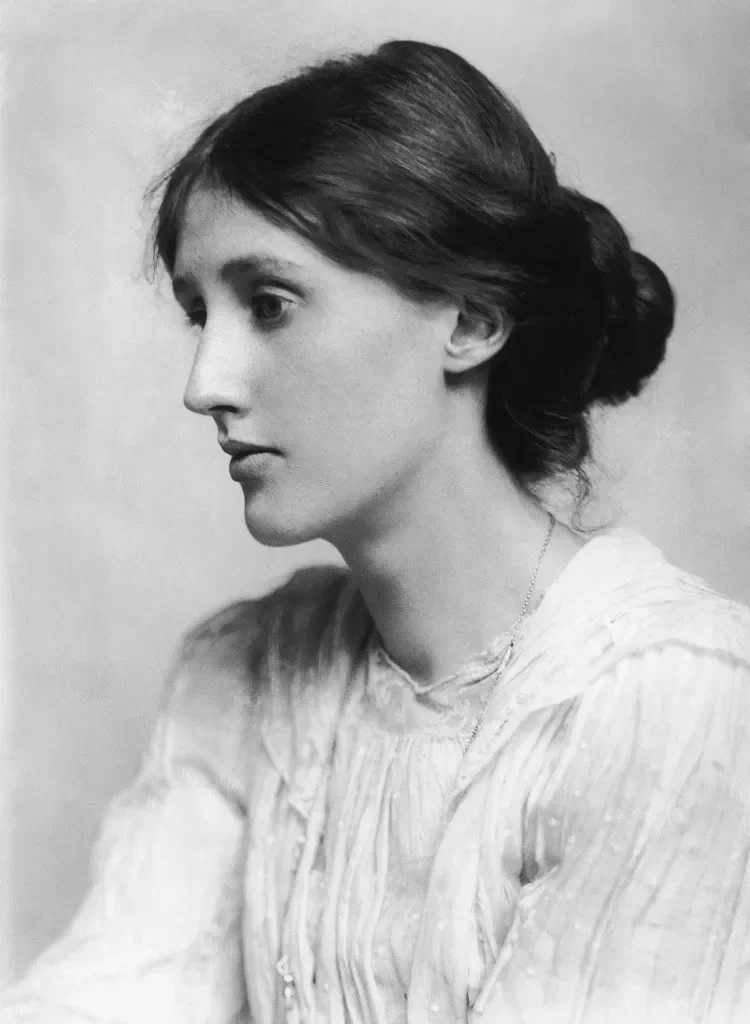
Photo: George Charles Beresford
When I think of perfect writing, something that tickles my senses and makes me contemplate my own existence while also probing my own emotions, I think of Virginia Woolf. Introspective, lyrical, visionary. A writer’s writer whose stories and style are a masterclass in using words to comfort the reader’s soul on this grand journey we call life.
Three Questions to Ask When Studying Sentences
Use these three guiding questions to help you study the model sentences below and to write your own:
How is the sentence structured, and why does that structure work?
What literary or rhetorical devices are being used, and how do they enhance the sentence?
How does the sentence create emotion, and what techniques contribute to that effect?
Three Sentences by Virginia Woolf to Study and Imitate
Sentence #1
“I see you everywhere, in the stars, in the river, to me you’re everything that exists; the reality of everything.”
Practice: Try this sentence frame using a topic from your writing.
I ____ you ____, in the ____, in the ____, to me you’re ____; the ____ of ____.
Here’s an example I came up with.
I hear your voice everywhere, in the morning when I see the ring I gave you, in the evening when I drive by the park where we met, to me you’re the quiet roar in my heart; the sound of a lost love.
Sentence #2
“He smiled the most exquisite smile, veiled by memory, tinged by dreams.”
Practice: Try this sentence frame using a topic from your writing.
(Pronoun) _____ (verb) the most (adjective) (noun), _____ by ______, _____ by _____.
Here’s an example I came up with.
She danced the most intoxicating dance, inspired by desire, fueled by passion.
Sentence #3
“To love makes one solitary.”
Practice: Try this sentence frame using a topic from your writing.
To _____ makes one _____ .
Here’s an example I came up with.
To dream makes one infinite.
Your Turn: Use the model sentences and frames to craft your own sentences and post them in the comments below.
Two Quotes by Virginia Woolf on used books and the verb “dissolve”
Quote #1
“Second hand books are wild books, homeless books; they have come together in vast flocks of variegated feather, and have a charm which the domesticated volumes of the library lack.”
Journal Prompt: If you have a used book, take a few moments and look it over. Imagine the people who owned the book before you. Who were they? Why did they buy the book? Did they like it? Did they even read it? After examining the book, write for 10 minutes about who those people are and how the book you now own connects all of you.
Quote #2
“I am in the mood to dissolve in the sky.”
Journal Prompt: What does this sentence mean? Look up synonyms for “dissolve” and use each one in the sentence. How do they change the tone of the sentence? What about antonyms? How might the antonym of “dissolve” change the meaning and tone of the sentence?
One Cool Thing - The Only Recording of Woolf’s Voice & The Death of the Moth
This is the only surviving audio recording of Virginia Woolf. It was part of a BBC series on the craft of writing, and in this section Woolf discusses words - old words, new words, their beauty, their utility, and their faults. It’s a fascinating listen, one in which you can feel the tone of her voice and how it perfectly matches the tone of her writing.
Help Spread the Word
If you found this article helpful, here are three ways you can help:
Option #1: Leave a comment below about what you like and any tips for making it more helpful.
Option #2: Click on the Subscribe button:
Option #3: Share this with a friend who writes fiction.